Deschamps Proves That Possession Without Purpose Is Just Noise
France are heading to the semi-finals. Not because they dazzled everyone with flowing football or kept Morocco pinned back—but because they understood something fundamental: a team with the ball is a team that cannot hurt you.

Les Bleus dismantled Morocco 2-0 in a performance so clinically controlled it almost felt clinical. This was not a match that screamed superiority on the surface. Morocco kept the ball (52% possession), moved it around (526 passes), and looked composed in phases. And yet, by the final whistle, they had mustered exactly one shot on target and an expected goals total of 0.14—essentially zero. That gap between what Morocco had and what they threatened is where Didier Deschamps' genius revealed itself.
The Art of Controlled Surrender
Here's the uncomfortable truth for Morocco: France did not want the ball.
Not because they lacked ability. Because they lacked need.
Deschamps set up his midfield—Manu Koné, Adrien Rabiot, and a carefully positioned pressing unit—to allow Morocco to circulate the ball in safe corridors. The moment the Moroccan attack drifted toward danger, France's midfield triangle compressed. Space evaporated. Passes got sideways. The ball went backward. Repeat.
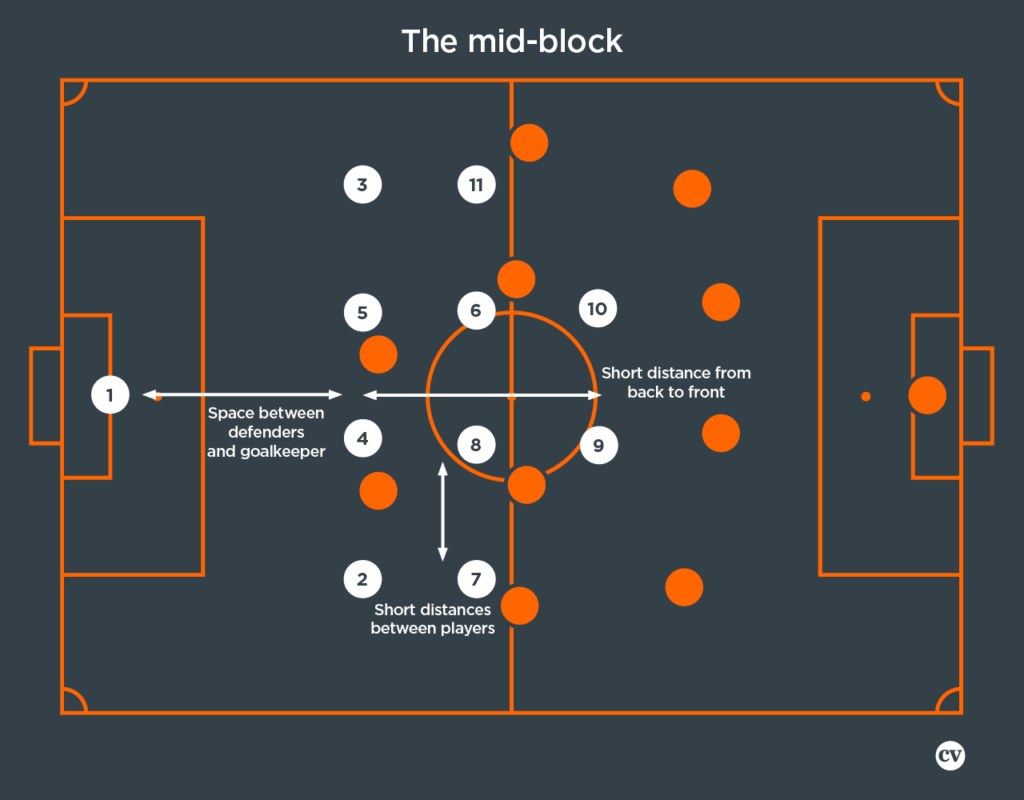
This is not luck. This is not a 0.14 xG by accident.
Morocco's two most creative threats—Brahim Díaz and Azzedine Ounahi—found no rhythm between the lines. Koné and Rabiot suffocated them before they could breathe. Achraf Hakimi, normally Morocco's most explosive outlet, spent the evening defending deeper than he has in months because Kylian Mbappé's positioning forced him into a purely defensive role. By half-time, it was clear: Morocco had possession. France had everything else.
The numbers don't lie.
The Chasm: A Tactically Complete Demolition
| Statistic | France | Morocco |
|---|---|---|
| Possession | 48% | 52% |
| Shots | 22 | 5 |
| Shots on Target | 9 | 1 |
| Expected Goals (xG) | 3.69 | 0.14 |
| Big Chances | 6 | 0 |
| Touches in Opposition Box | 28 | 8 |
| Final Third Entries | 64 | 35 |
France's attack was relentless. They created six big chances—double-digit territory for most teams—and an xG total that would finish most matches at 3-1 or 4-0 against a weaker side. But Morocco had a keeper playing out of his skin.
Bono's Masterclass: The Only Reason This Wasn't 5-0
If there was a hero for Morocco, his name is Yassine Bounou —though in defeat, heroism feels hollow.
The Morocco goalkeeper delivered what may have been the performance of his career: six saves, multiple one-on-one stops, a series of interventions inside the box that ranged from reflex to genuinely inspired. His 8.0 rating does not exaggerate. Without him, this doesn't end 2-0. It ends in the 4-5 range, the kind of scoreline that gets discussed for years as a low point.
France missed six big chances—an unusually high tally for a side of their attacking quality playing in a World Cup quarter-final. That speaks to clinical finishing being the only thing missing. It also speaks to Bono being genuinely world-class on the night. His distribution was sharp, his positioning smart, and when chaos erupted in the box, he was there.
It was the performance of a keeper trying to hold back the tide with his bare hands.
Dembélé's Ascension: The Moment France's Wings Truly Fired
Ousmane Dembélé did not simply play well. He played as if possessed.
The Man of the Match (9.0 rating) ran Morocco's left side ragged with direct, intelligent running and movement designed to drag defenders out of shape. His goal in the 66th minute was the punctuation mark on a performance that had already overwhelmed the Moroccan left-back. But it was the process, not just the finish, that mattered.
For most of this tournament, France's attacking output had revolved around Mbappé. That changed here. The supporting cast—Dembélé foremost, but also Michael Olise connecting midfield to attack with genuine creativity—gave Deschamps' attack a dimensionality it had lacked. Dembélé didn't just create chaos; he created structure within that chaos. His runs came at precise moments. His touches were efficient. His final ball arrived with urgency.
This was a winger understanding his role at the exact moment France needed it most.
Mbappé's Gravity: The Invisible Genius
Kylian Mbappé's 7.7 rating might suggest a quiet night. It was not.
His work was the kind that doesn't always jump off the stat sheet. Mbappé occupied multiple Morocco defenders simultaneously—not through brilliance alone, but through intelligent movement and positioning. Every time he drifted into space, Morocco's back line had to make a choice: follow him or hold shape? The tension created by that decision opened lanes for Olise, for Rabiot on the advance, for Dembélé on the wing.
This is not a flashy way to influence a game. It is, however, the most mature way—the way that wins World Cups.
How France Disarmed Morocco's Arsenal
France entered with a tactical blueprint. It worked so completely that by the end, Morocco's most dangerous players resembled exhausted shadows of themselves.
Hakimi: Digne's protection and Mbappé's positioning pushed him into a defensive posture. Overlapping opportunities dried up. His attacking threat, normally Morocco's primary outlet, was neutralized.
Brahim Díaz: Koné and Rabiot allowed him no space between the lines. Every time Díaz tried to drop deep and build, he found himself facing immediate pressure. He was forced into a holding role rather than a creative one.
Ounahi: The creative hub of Morocco's midfield was simply smothered. Rabiot's positioning made it nearly impossible for Ounahi to receive the ball in areas where he could dictate play. When he did get it, he was under duress.
The Moroccan midfield retained possession. It never retained control.
The Verdict: France's Maturity Is Terrifying
This wasn't a 2-0 victory that left room for debate. It was a comprehensive dismantling disguised as a comfortable win. France showed that at this level, with this level of talent, they no longer need to chase possession to control matches. They can sit deeper, wait for mistakes, and then unleash a counterattack with devastating precision.
Mbappé, Dembélé, and Olise are all operating at levels that suggest the semi-finals will feature France as genuine favorites. Deschamps has them balanced—defensively organized, offensively dangerous, tactically intelligent, and capable of pivoting their approach based on opponent. That is not a team that gets surprised.
Morocco's run ends here. They will look back and know they were beaten by a better team playing smarter football, not by luck or fortune.

France moves to the semi-finals looking every inch like the team most capable of lifting the 2026 World Cup.

No comments:
Post a Comment